
Diseases
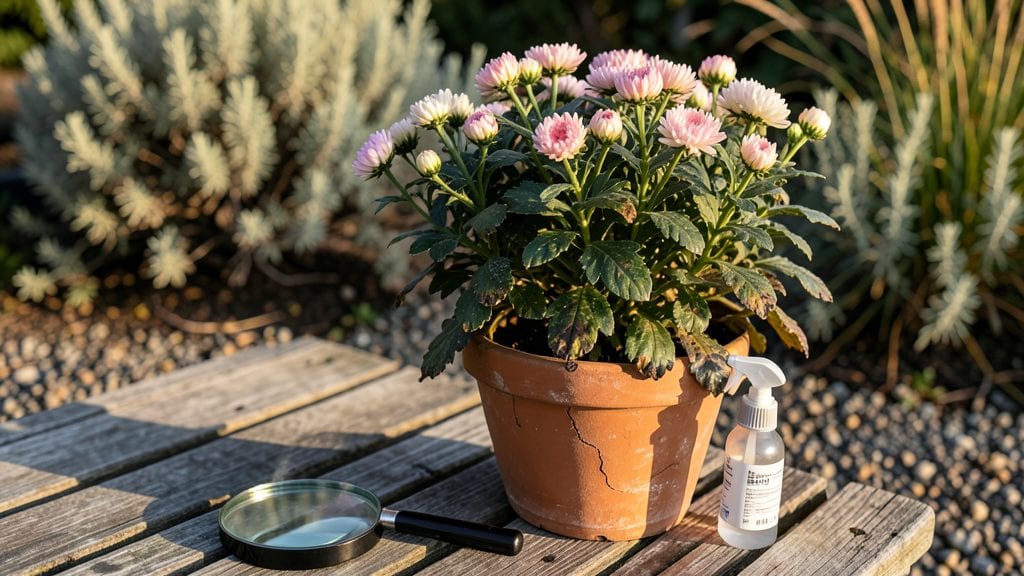
My plant chrysanthemum used to look like someone had sprayed it with rust-colored paint—until I learned to spot and stop fungal diseases early. 🌿 Those brown spots, white powder, or orange pustules aren’t just cosmetic; they’re silent killers that spread faster. than weeds in summer heat.
The good news? Most chrysanthemum diseases respond to simple, organic fixes if you catch them before they take over.
Leaf spot, powdery mildew, and rust are the usual suspects, each leaving its own telltale marks: leaf spot shows up as dark circles with yellow halos, mildew coats leaves in chalky white, and rust makes the undersides look like someone dusted them with cinnamon.
The root cause? Too much moisture, poor airflow, or stressed plants from overcrowding. I’ve saved dozens of plants by adjusting watering habits and thinning out crowded stems—no fancy chemicals needed.
Once you identify the problem, treatment is straightforward: prune infected leaves immediately, space plants for better airflow, and apply a mix of baking soda spray for mildew or neem oil for rust.
For prevention, water at the base in the morning and avoid overhead sprinklers. Your chrysanthemums will reward you with bold blooms all season long—no more sad, spotty leaves ruining the show.
This works for both garden beds and container-grown mums, whether you’re dealing with a single infected plant or a whole border. The key is acting fast and keeping plants healthy year-round. Let’s get those flowers thriving again!
The Hidden Triggers Behind Sickly Chrysanthemums
Chrysanthemums may seem tough, but they’re surprisingly vulnerable to a host of diseases—especially fungal infections—that thrive under the right (or wrong) conditions. Understanding why these problems arise is the first step to keeping your plants lush and disease-free. Let’s break down the key culprits and their sneaky science.
Fungal spores love damp, stagnant environments—and nothing creates those conditions like overcrowded chrysanthemums. When plants are too close together, humidity builds up between leaves, creating the perfect breeding ground for pathogens like Botrytis (gray mold) and Septoria leaf spot.
- Why it happens: Stagnant air traps moisture, slowing evaporation and keeping fungal spores hydrated. Poor airflow also prevents UV light from naturally inhibiting spore germination.
- Science in action: Fungal hyphae (thread-like structures) spread faster in high humidity (above 75%) because they require free water to grow. Overcrowding also stresses plants, weakening their defenses.
- Actionable fix: Space plants 12–18 inches apart and prune lower leaves to improve airflow. Use drip irrigation instead of overhead watering to keep foliage dry.
Chrysanthemums despise soggy roots—but they also suffer when deprived of moisture. Both extremes create openings for disease.
- Excessive moisture:
- Saturated soil drowns roots, cutting off oxygen and inviting Phytophthora (root rot) and Pythium (damping-off).
- Waterlogged conditions leach nutrients, making plants more susceptible to powdery mildew.
- Inconsistent watering:
- Drought stress weakens cell walls, making leaves more vulnerable to Alternaria leaf spot.
- Fluctuating soil moisture triggers osmotic stress, forcing plants to expend energy on survival instead of disease resistance.
Pro tip: 🌡️ Aim for 1 inch of water per week, delivered deeply but infrequently. Use well-draining soil (amend with perlite or sand) and raised beds if your area has heavy clay.
Many chrysanthemum diseases are latent—meaning they lurk in soil, tools, or even old plant debris, waiting for the perfect moment to strike.
- Why it happens:
- Spores from Septoria, Ramularia, or Erysiphe (powdery mildew) can survive years in organic matter, soil, or infected plant material.
- Wind, rain, and splashing water spread spores from contaminated sources to healthy plants.
- Science in action: Fungal spores produce enzymes that break down plant cell walls, giving them entry. Some, like Botrytis, release oxalic acid to kill tissue and create a food source.
- Actionable fix:
- 🧹 Rotate crops—don’t replant chrysanthemums in the same spot for at least 3 years.
- 🔥 Sterilize tools with a 10% bleach solution (1 part bleach to 9 parts water) between uses.
- 🌱 Remove debris—pull up old plants and till soil in fall to expose spores to sunlight (UV light kills many fungi).
Fungi aren’t picky—they just need the right temperature and humidity to party. For chrysanthemums, this usually means:
| Disease | Ideal Fungal Conditions | How to Disrupt It |
|---|---|---|
| Powdery Mildew | 60–80°F + high humidity (80%+) + poor airflow | 🌬️ Increase airflow with fans; water in the morning so foliage dries by night. |
| Gray Mold (Botrytis) | 50–77°F + wet foliage for >24 hours | ✂️ Prune crowded growth; avoid overhead watering. |
| Leaf Spot (Septoria/Ramularia) | 68–77°F + leaf wetness + rain | 🌧️ Use drip irrigation; apply copper fungicide preventively. |
Pro tip: 🌡️ Monitor your microclimate with a hygrometer—aim to keep humidity below 60% during peak growth.
Chrysanthemums need a balanced diet to fight off invaders. When nutrients are off-kilter, they become easy targets.
- Nitrogen excess:
- Too much N (>3% in soil) promotes soft, lush growth that’s prone to powdery mildew and Botrytis.
- Science: High N weakens cuticle thickness, making leaves more permeable to spores.
- Potassium deficiency:
- Low K (<1%) reduces cell wall strength, making plants vulnerable to leaf spots.
- Action: Test soil and amend with potassium sulfate or wood ash.
- Micronutrient gaps:
- Lack of magnesium (Mg) or calcium (Ca) weakens membrane integrity, letting fungi invade.
Pro tip: 📊 Use a soil test kit to check pH (ideal: 6.0–6.5) and nutrient levels. A balanced 10-10-10 fertilizer (N-P-K) keeps defenses strong.
How to Fix Common Chrysanthemum Ailments
Once you’ve spotted the trouble—whether it’s powdery mildew, leaf spots, or wilted stems—it’s time to act! The good news? Most chrysanthemum diseases respond well to early intervention.
Below, we’ll break down practical fixes for each issue, plus prevention tips to keep your blooms thriving. Think of this as your plant’s first-aid kit!
Cause: Erysiphe cichoracearum thrives in humid, shaded conditions, coating leaves in a chalky film.
How to Treat It: 🔥 Remove Infected Foliage – Snip off heavily mildewed leaves with clean pruners and dispose of them in the trash (not compost). This stops the fungus from spreading.
🍳 Spray with Baking Soda Solution – Mix 1 teaspoon baking soda + 1 teaspoon horticultural oil + 1 quart water in a spray bottle. Apply to both sides of leaves in the early morning or evening (avoid direct sun to prevent leaf burn).
Reapply every 7–10 days until symptoms fade.
👨🍳 Boost Airflow – Thin out crowded plants and space them 12–18 inches apart to reduce humidity. If growing in containers, ensure pots have drainage holes.
🥘 Fungicide as Last Resort – For severe cases, use a copper-based fungicide (like Cupron) or neem oil spray (1 tbsp neem oil + 1 tsp mild soap per quart of water). Follow label instructions carefully.
Prevention Tips: ✨ Water at the Base – Avoid overhead watering; use a drip irrigation system or water early in the day so leaves dry quickly. 🌡️ Space Plants Properly – Overcrowding traps moisture. Prune regularly to improve airflow. 🎯 Rotate Crops – If you grow chrysanthemums yearly, avoid planting in the same spot for 3–4 years to break fungal cycles.
Cause: Septoria or Alternaria fungi create dark, concentric spots that enlarge over time.
How to Treat It: 🔥 Prune and Destroy – Cut off all spotted leaves and sterilize your pruners with rubbing alcohol between cuts.
🍳 Apply Fungicidal Spray – Use a chlorothalonil-based fungicide (like Daconil) or organic options like potassium bicarbonate spray (1 tbsp per gallon of water). Spray weekly until new growth appears.
👨🍳 Improve Drainage – Ensure pots or garden beds have well-draining soil (amend with perlite or compost). Water only when the top inch of soil is dry.
🥘 Solarize the Soil (For Gardeners) – If leaf spot persists, cover the soil with clear plastic for 4–6 weeks in hot sun to kill fungal spores in the ground.
Prevention Tips: 💡 Water in the Morning – Wet leaves stay vulnerable overnight. Use a soaker hose to keep foliage dry. 🔪 Clean Up Debris – Remove fallen leaves and spent blooms promptly to eliminate fungal food sources. 🌱 Choose Resistant Varieties – Some chrysanthemums (like ‘Dynasity’ or ‘Bright Golden Anne’) are bred for disease resistance.
Cause: Phytophthora or Pythium fungi thrive in waterlogged soil, causing yellowing leaves, wilting, and mushy stems.
How to Treat It: 🔥 Repot Immediately – Gently remove the plant, trim blackened roots with sterilized scissors, and repot in fresh, sterile potting mix with perlite or sand for drainage.
🍳 Adjust Watering Habits – Let the top 2 inches of soil dry out between waterings. Use pots with drainage holes and saucers (empty excess water after 15 minutes).
👨🍳 Apply Hydrogen Peroxide – Mix 1 tablespoon 3% hydrogen peroxide per quart of water and water the soil once weekly for 2 weeks to inhibit fungal growth.
🥘 Fungicide Soak – For severe cases, soak roots in a 1:10 dilution of bleach to water for 10 minutes, then rinse and repot.
Prevention Tips: ✨ Raise Garden Beds – If growing in the ground, create mounded beds to prevent water pooling. 🌡️ Mulch Strategically – Use gravel or straw mulch (not thick organic mulch) to allow airflow to roots. 🎯 Avoid Overpotting – Roots need space; choose containers 1–2 inches larger than the current root ball.
Cause: Often a mix of bacterial wilt (Erwinia) or viral infections, plus environmental stress.
How to Treat It: 🔥 Isolate the Plant – Move it away from healthy chrysanthemums to prevent spread. Dispose of severely infected plants (burn or trash).
🍳 Prune for Airflow – Trim back 1/3 of the plant to reduce humidity and improve light penetration.
👨🍳 Disinfect Tools – Sterilize pruners with bleach water (1 part bleach to 9 parts water) or 70% isopropyl alcohol before and after use.
🥘 Systemic Antibacterial Spray – For bacterial wilt, try a copper fungicide or oxytetracycline spray (follow label instructions). Note: Viral wilting has no cure; remove the plant to protect others.
Prevention Tips: 💡 Buy Certified Disease-Free Plants – Check for yellowing or wilting before purchasing. 🔪 Rotate Plant Families – Avoid planting chrysanthemums in the same spot yearly. 🌱 Control Aphids & Thrips – These pests spread viral diseases. Spray with soapy water (1 tsp mild soap per quart) or neem oil.
Final Pro Tip: 🌟 Monitor and Maintain – Check your chrysanthemums weekly for early signs of stress. Healthy plants are your best defense! With these fixes, your blooms will bounce back—and stay disease-free for seasons to come. 🌼
Frequently asked questions
Why do my chrysanthemum leaves turn brown with yellow edges?
Those symptoms likely signal leaf spot (from Septoria or Alternaria) or nutrient deficiencies. Brown spots with yellow halos appear when fungal spores thrive in damp conditions. Check for poor airflow or overwatering. Prune infected leaves immediately and apply a copper fungicide or potassium bicarbonate spray every 7 days.
Is white powder on chrysanthemum leaves harmful?
Yes, that’s powdery mildew—a fungal infection that spreads fast in humid conditions. The white coating blocks sunlight, weakening the plant. Treat it by removing infected leaves, spacing plants 12–18 inches apart, and spraying a baking soda solution (1 tsp baking soda + 1 tsp oil per quart of water) every 7–10 days.
Can I save a chrysanthemum with blackened stems?
Blackened stems often mean root rot from overwatering or poor drainage. Act fast: repot the plant in fresh, sterile potting mix with perlite, trim blackened roots, and water only when the top 2 inches of soil are dry. For severe cases, soak roots in a 1:10 bleach-to-water solution for 10 minutes before repotting.
How do I prevent chrysanthemum diseases in containers?
Use pots with drainage holes, water at the base only, and avoid overhead sprinklers. Space plants 12 inches apart and prune lower leaves to improve airflow. Sterilize tools between uses, and rotate crops—don’t replant chrysanthemums in the same container for 3+ years.
Are there disease-resistant chrysanthemum varieties?
Yes! Look for hybrids like ‘Dynasity’ or ‘Bright Golden Anne’, bred to resist powdery mildew and leaf spot. These varieties thrive in humid conditions and require fewer fungicide treatments. Check seed packets or nursery labels for disease-resistant tags.