Planting
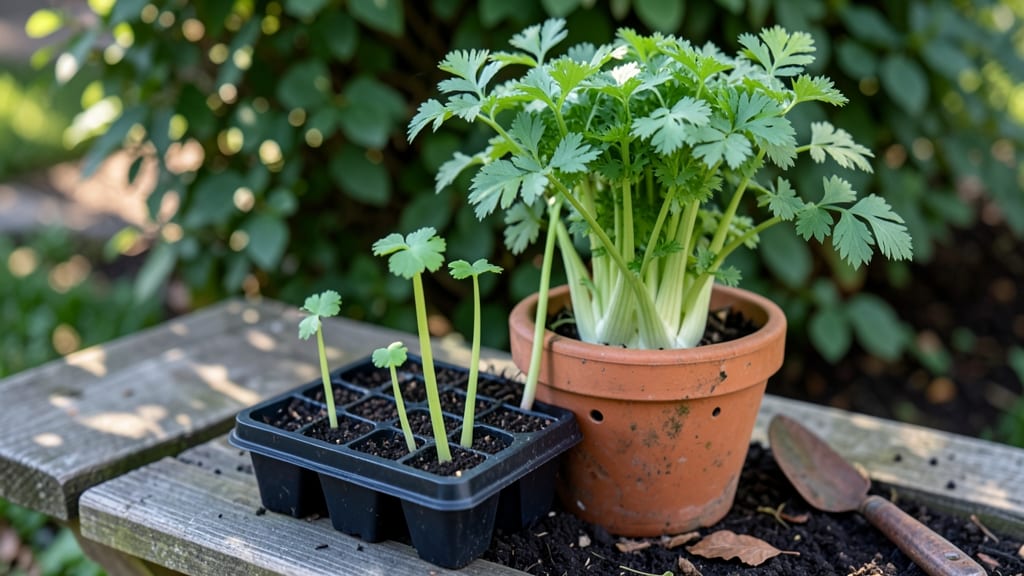
Here are some essential celery planting tips to help you skip the frustration of slow germination and leggy seedlings—just tweak your timing and light for year-round success. 🌱 The key is starting seeds 10-12 weeks before your last frost, using a warm seed-starting mat to speed up germination.
Celery needs rich, moist soil and consistent moisture to grow strong stems. Space seedlings 6-8 inches apart in containers or garden beds, and keep soil evenly damp (never soggy).
Once plants reach 4-6 inches tall, thin to 12-15 inches apart for proper airflow and growth. This spacing trick prevents bolting and ensures thick, flavorful stalks by harvest time.
📚 In This Guide
- What you need
- Instructions
- Tips and common mistakes
- Wrapping up and next steps
What you need
- ● Celery Seeds or Seedlings: Seeds: 1 packet (typically 500–1,000 seeds) or organic heirloom seeds (e.g., 'Utah', 'Tall Utah'). Seedlings: 3–6 healthy transplants (available at nurseries or online).
- ○ Growing Medium: Well-draining potting mix (for containers) or loamy garden soil (amended with compost). Optional: Hydroponic medium (like clay pebbles or coconut coir) for soilless setups.
- ● Containers (if not gardening in-ground): At least 12–18 inches deep and 12 inches wide per plant (or a 5-gallon bucket for multiple stalks). Drainage holes are a must!
- ○ Fertilizer: Balanced fertilizer (10-10-10) or compost (for organic growth). Optional: Fish emulsion or seaweed extract for a nutrient boost.
- ● Watering Supplies: Watering can with a rose attachment (for gentle watering). Spray bottle (for seedlings or indoor setups).
- ● Mulch: Straw, wood chips, or black plastic mulch (to retain moisture and suppress weeds).
Step-by-Step guide to planting celery for year-round success
Celery thrives with patience and precision—here’s how to grow it strong and productive.
🌱 Step 1: Prepare the Soil for Optimal Growth
Celery demands rich, well-draining soil with plenty of organic matter. Mix the 2 gallons of compost into the top 6 inches of your planting area to improve fertility and drainage. This plant hates soggy roots, so avoid heavy clay soil unless you amend it heavily. Work the compost in until the soil looks dark and crumbly—like a well-aerated cake batter.
Test moisture by squeezing a handful—it should hold together but not drip. If your soil is too sandy, add 1 gallon of peat moss to retain moisture. Celery needs consistent dampness, so don’t skip this prep. I dig a 12-inch square for each plant and fill it with the amended soil before transplanting.
☀️ Step 2: Choose the Right Location and Spacing
Celery requires partial shade—think 4-6 hours of morning sun and afternoon shade, especially in hot climates. Full sun scorches the leaves, while too much shade makes stalks thin and stringy. I plant mine 12 inches apart in rows 18 inches apart to allow airflow and prevent disease.
For year-round growth, start a new batch every 4-6 weeks in spring and fall. If growing in containers, use 5-gallon pots for each plant—celery’s deep roots need space. Place pots where they get dappled sunlight (like under a tree canopy) to mimic ideal conditions.
💧 Step 3: Transplant Seedlings Carefully
Celery seedlings are delicate—handle them by the leaves, not the stems, to avoid damage. Plant them no deeper than they grew in their nursery pots, as buried stems rot easily. Space them 12 inches apart in rows, and water deeply right after transplanting to settle the soil around the roots.
Mulch with 2 inches of straw to keep soil moisture even and suppress weeds. This is key—celery’s shallow roots dry out fast in hot weather. Water every 2-3 days until the top inch of soil feels moist, but never soggy. Overwatering causes rot, while underwatering makes stalks tough and bitter.
⏰ Step 4: Maintain Consistent Moisture and Fertility
Celery needs steady moisture—think of it like a sponge that must never dry out. Water at the base (not overhead) to prevent fungal diseases. I use a soaker hose for even hydration, keeping the soil consistently damp but not waterlogged. In containers, check soil moisture daily in hot weather.
Fertilize lightly every 4 weeks with a balanced 10-10-10 fertilizer (use 1 tablespoon per plant). Too much nitrogen makes leaves grow fast but stalks stay small. Harvest outer leaves as they mature—this encourages bushier growth and prevents bolting (when celery flowers prematurely).
✂️ Step 5: Harvest and Extend the Season
Harvest individual stalks when they reach 12-14 inches tall, cutting them at the base with a sharp knife. Leave the center leaves to keep producing. For year-round harvests, succession plant every 4-6 weeks in spring and fall. In winter, protect plants with frost cloth if temperatures drop below 25°F. Celery is frost-tolerant but grows slower in cold.
If stalks turn bitter or woody, it’s overmature—harvest younger for sweeter flavor. With proper spacing and care, you’ll enjoy fresh celery all year, not just summer. The key? Patience and consistency—celery rewards steady effort.
Tips & tricks for perfect celery planting
Growing celery successfully takes a little strategy—here are the secrets that’ll help you avoid common pitfalls and grow crisp, flavorful stalks all year.
Soil Prep Secret: When you’re mixing in that 2 gallons of compost in Step 1, don’t just scratch it in—really work it through the top 6 inches of soil. Think of it like making a rich soil "cake batter" that holds moisture without getting soggy. If your soil feels too dense, add a handful of perlite (optional) to improve drainage even more. The goal is soil that’s like a well-loved sponge—not too wet, not too dry.
Sunlight Strategy: That 4-6 hours of morning sun in Step 2 is non-negotiable, but here’s the trick: if you’re in a hot climate, use shade cloth (30-50%) during peak afternoon sun to protect delicate leaves. I’ve seen celery leaves crisp up in minutes when exposed to full afternoon sun. For containers, place them where they get dappled light—like near a tree with sparse branches.
Transplanting Technique: In Step 3, when you’re handling those delicate seedlings, here’s what I do: gently squeeze the base of the pot to loosen the root ball, then slide the seedling out by the leaves—not the stem. Plant it so the soil line matches what it had in the pot. If you bury the stems too deep, they’ll rot before your celery even gets a chance to grow. And that 2 inches of straw mulch? It’s your secret weapon against evaporation and weeds.
Watering Wisdom: The key to celery’s crisp texture is consistent moisture, but timing matters. Water in the early morning so leaves dry quickly, preventing fungal diseases. I set up a simple drip irrigation system for my celery beds—it delivers water right at the base without wetting the leaves. And never let that top inch dry out completely, especially during those 4-week growth spurts between fertilizing.
Pro Tips for Celery Planting Tips
- Growing celery successfully takes a little strategy—here are the secrets that’ll help you avoid common pitfalls and grow crisp, flavorful stalks all year.
- Soil Prep Secret: When you’re mixing in that 2 gallons of compost in Step 1, don’t just scratch it in—really work it through the top 6 inches of soil.
- Sunlight Strategy: That 4-6 hours of morning sun in Step 2 is non-negotiable, but here’s the trick: if you’re in a hot climate, use shade cloth (30-50%) during peak afternoon sun to protect delicate leaves.
Frequently asked questions
Got questions about growing celery? You’re not alone—this crunchy green can be tricky! Here are answers to the most common queries to help you grow a thriving crop.
When is the best time to plant celery?
Celery thrives in cool weather, so plant seeds 4–6 weeks before your last frost date in early spring or 8–10 weeks before your first fall frost. In warm climates, opt for winter planting (October–December) to avoid summer heat. Avoid planting when soil temps exceed 75°F (24°C), as seeds may rot.
How long does it take for celery to grow?
From seed to harvest, celery typically takes 100–140 days, depending on the variety. Baby celery (cut-and-come-again) may be ready in 60–80 days. Patience is key—celery grows slowly and needs consistent moisture and cool temps. Start seeds indoors 8–10 weeks early for a head start!
Can I grow celery in containers?
Celery does well in deep containers (at least 12 inches tall) with well-draining soil. Use a large pot (18+ inches wide) for multiple plants. Ensure the container has drainage holes and place it in a sunny spot (6+ hours of light daily). Dwarf varieties like ‘Utah’ or ‘Golden Self-Blanching’ are great for containers.
Why is my celery seed not germinating?
Celery seeds are fussy—germination can take 14–30 days (or longer!) in cool soil. Common issues include:
- Too-warm soil: Keep soil temps between 60–70°F (15–21°C).
- Low moisture: Keep soil consistently damp (not soggy).
- Old seeds: Use seeds 1–2 years old max.
- Poor soil: Mix in compost for better drainage and nutrients.
How do I protect celery from bolting?
Celery bolts (sends up flower stalks) when stressed by heat, drought, or poor soil. To prevent it:
- Plant in partial shade during hot months.
- Water deeply 2–3 times weekly (keep soil moist).
- Use mulch to retain moisture and cool roots.
- Harvest outer stalks first to reduce plant stress.
Wrapping up and next steps
Growing your own celery is a rewarding journey—whether you're a seasoned gardener or just starting out! With the right spacing tricks, proper soil prep, and a little patience, you’ll soon be harvesting crisp, homegrown stalks year-round. 🌱
Now that you’re armed with these proven tips, it’s time to roll up your sleeves and get planting! Start small, track your progress, and soon you’ll be enjoying the satisfaction of a thriving celery patch. Happy gardening!