
Planting
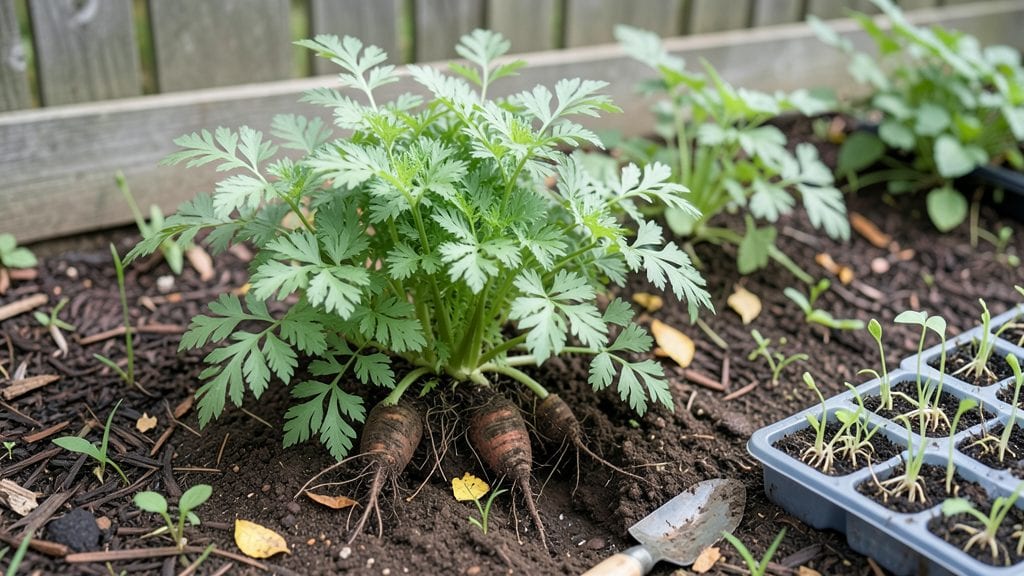
Here are carrots planting tips you’ll wish you’d known sooner—like how soil so fine it feels like velvet can turn a harvest of gnarled roots into sweet, straight rewards. 🌱 a few simple soil tricks that guarantee straight, sweet roots every time.
The secret isn’t just loose soil—it’s the right mix of sand, compost, and patience. Work in 2-3 inches of coarse sand or perlite to break up clay, then add aged compost for nutrients. Scatter seeds thinly (they’re tiny!) and press them just below the surface—no deeper than ¼ inch.
Water gently to keep the soil moist but not soggy, and watch for those first green shoots in about 2 weeks.
📚 In This Guide
- What you need
- Instructions
- Tips and common mistakes
- Wrapping up and next steps
What you need
- ● Carrot seeds: 1–2 grams (enough for ~100 plants). Opt for heirloom varieties like ‘Danvers’ or ‘Nantes’ for sweetness.
- ● Seed-starting soil or potting mix: 1–2 gallons (sterile, well-draining blend). Avoid garden soil—it’s too dense!
- ● Garden bed or containers: For in-ground: Loose, 6–12 inches deep soil (no rocks or clumps!).
- ● For containers: At least 12-inch-deep pots (deeper = longer carrots!).
- ● Planting tool: A hand trowel or dibble (for precision) to create shallow furrows (¼-inch deep).
- ● Watering can or hose with a gentle spray nozzle: Keep soil moist but not soggy.
- ○ Row markers or stakes: Optional but helpful for spacing (aim for 2–3 inches apart in rows, 12–15 inches between rows).
- ● Seedling heat mat: Speeds up germination (especially in cool climates).
- ● Organic compost or worm castings: Mix 1–2 cups per square foot into soil for nutrients.
- ● Mulch (straw or shredded leaves): Retains moisture and keeps soil cool.
- ● Fertilizer (low-nitrogen, like 5-10-10): Light application at planting and mid-growth.
- ● Carrot thinners or scissors: For precision when thinning seedlings to 3–4 inches apart.
Step-by-step instructions for planting carrots like a pro
Here's how to grow carrots that stay straight and taste sweeter than store-bought.
🌱 Step 1: Choose the Right Site and Prepare the Soil
Carrots need loose, rocky-free soil to grow straight. Pick a spot with full sun (6-8 hours daily) and dig down 12 inches deep to break up any compacted layers. I use a garden fork to loosen the soil—this prevents roots from twisting as they grow.
Mix in 2-3 inches of compost into the top 6 inches of soil. Carrots are fussy about texture, so sift out any clumps or stones larger than ¼ inch. The goal is soil so fine it feels like flour when dry—this ensures roots grow long and unobstructed.
💧 Step 2: Sow Seeds at the Perfect Depth and Spacing
Scatter seeds ¼ inch deep in rows spaced 12-18 inches apart. I use a shallow tray to hold seeds while I sprinkle them—this keeps my hands clean and ensures even spacing. Planting too deep makes carrots tough and bitter.
Thin seedlings to 2-3 inches apart once they're 2 inches tall. Here's the trick: don't yank them out—snip with scissors at soil level. This prevents disturbing nearby roots and gives you smaller carrots for snacks while you wait for the big ones to grow.
☀️ Step 3: Keep Soil Moist and Protect Young Plants
Water gently but consistently—carrots hate drying out. Aim for 1 inch of water per week, delivered through a fine spray nozzle to avoid dislodging seeds. I check moisture by sticking my finger 1 inch deep; if it feels dry, it's time to water.
Use row covers or floating fabric to shield seedlings from pests like carrot rust flies. Remove covers when plants reach 4 inches tall—they'll need sunlight then. Watch for yellowing leaves; this usually means either too much water or a pest problem.
⏰ Step 4: Thin and Harvest for Perfectly Sweet Carrots
Thin again when tops are 3 inches tall, leaving 3-4 inches between plants. This gives roots room to swell without competing. I harvest a few test carrots at 60 days to check size—if they're ½ inch thick**, they're ready for baby carrots.
For full-sized carrots, wait until 70-80 days when tops are 1 foot tall. Pull gently but firmly—if the soil is dry, water first to make extraction easier. Store harvested carrots in the fridge for up to 3 weeks; they'll keep longer if you leave 1 inch of stem attached.
Tips & tricks for perfect carrot planting
These soil secrets transform your garden into a carrot-growing powerhouse—no more crooked or bitter roots!
Soil Texture is Everything: The key to straight carrots lies in that flour-like soil consistency. After digging down 12 inches, I run my hands through the loosened soil—it should feel like dry flour with no grit. If you find stones larger than ¼ inch, remove them completely. I've learned the hard way that even small rocks can cause forking, no matter how carefully you plant. For extra insurance, mix in a handful of sand when amending the top 6 inches—this helps maintain that perfect texture as roots develop.
Depth Matters More Than You Think: Planting seeds just ¼ inch deep might seem shallow, but this is critical. Any deeper and you'll end up with tough, bitter carrots that never develop their signature sweetness. I use a shallow tray to hold seeds while sprinkling—this keeps my hands clean and ensures consistent depth. Pro tip: If you're planting in heavier clay soil, consider creating raised beds to improve drainage and maintain that ideal planting depth throughout the growing season.
Thinning Technique That Saves Your Harvest: When it's time to thin seedlings to 2-3 inches apart, resist the urge to pull them out by hand. That tugging disturbs nearby roots and can actually encourage forking. Instead, use clean scissors to snip at soil level. The little carrots you harvest this way make perfect snacks, and your main crop will grow straighter than ever. I've saved enough baby carrots from thinning to fill a lunchbox—no waste here!
Watering Wisdom for Sweet Success: The 1-inch-per-week watering guideline is non-negotiable for flavor development. I check moisture by sticking my finger 1 inch deep—if it feels dry, that's your cue. For even moisture distribution, I water in the morning using a gentle rain nozzle. This prevents soil crusting that can stifle young seedlings. And here's a secret: slightly under-watering during the final 2 weeks before harvest actually concentrates natural sugars, making your carrots even sweeter.
Pro Tips for Carrots Planting Tips
- These soil secrets transform your garden into a carrot-growing powerhouse—no more crooked or bitter roots!
- Soil Texture is Everything: The key to straight carrots lies in that flour-like soil consistency.
- Depth Matters More Than You Think: Planting seeds just ¼ inch deep might seem shallow, but this is critical.
Frequently asked questions
Got questions about growing perfect carrots? You’re not alone—even experienced gardeners have doubts! Here are answers to the most common queries to help you cultivate straight, sweet roots with confidence.
When is the best time to plant carrots?
Carrots thrive in cool weather, so plant them 2–3 weeks before your last frost date in spring or 8–10 weeks before your first fall frost. Avoid extreme heat (above 80°F/27°C), as it can cause bitter roots and stunted growth. For year-round harvests, try succession planting every 2–3 weeks.
How long does it take for carrots to grow?
Most carrot varieties mature in 60–80 days, but smaller "baby" carrots can be harvested in as little as 40–50 days. Check seed packets for specific timelines—some heirloom types (like Danvers) take longer. Thin seedlings early to avoid competition, which speeds up root development.
Why are my carrots growing crooked or forked?
Crooked or forked carrots usually stem from poor soil conditions. Loosen soil deeply (at least 12 inches) before planting and mix in compost to prevent compaction. Avoid rocky or clay-heavy soil—carrots need uniform, loose dirt to grow straight. If forking occurs, try container growing with well-draining potting mix.
Can I grow carrots in containers or small spaces?
Choose short varieties like Paris Market or Little Finger for containers. Use pots at least 12 inches deep with drainage holes, and fill with a loose, sandy potting mix. Space seeds 2 inches apart and thin to 1–2 inches. Containers warm up faster, so plant them earlier in spring or later in fall than ground beds.
How do I keep pests like carrot flies away?
Carrot flies (and their larvae) can wreak havoc, but prevention is easy! Use floating row covers early in the season, or interplant carrots with leeks, onions, or rosemary—their strong scents deter pests. Avoid overwatering (flies love damp soil), and rotate crops yearly to break their life cycle. For severe infestations, try neem oil sprays.
Wrapping up and next steps
Growing straight, sweet carrots is all about patience, the right soil, and a few clever tricks! 🌱 By choosing loose, well-draining soil, spacing seeds properly, and keeping weeds at bay, you’ll be rewarded with a bountiful harvest.
Don’t forget—thin seedlings early to avoid competition, and water consistently for those perfect, crisp roots.
Ready to dig in? Start with a small batch this season, experiment with varieties, and soon you’ll be a carrot-growing pro! 🎉 Grab your gloves, mark your calendar, and get planting—your future salads (and bragging rights) will thank you.