
Pests and Diseases
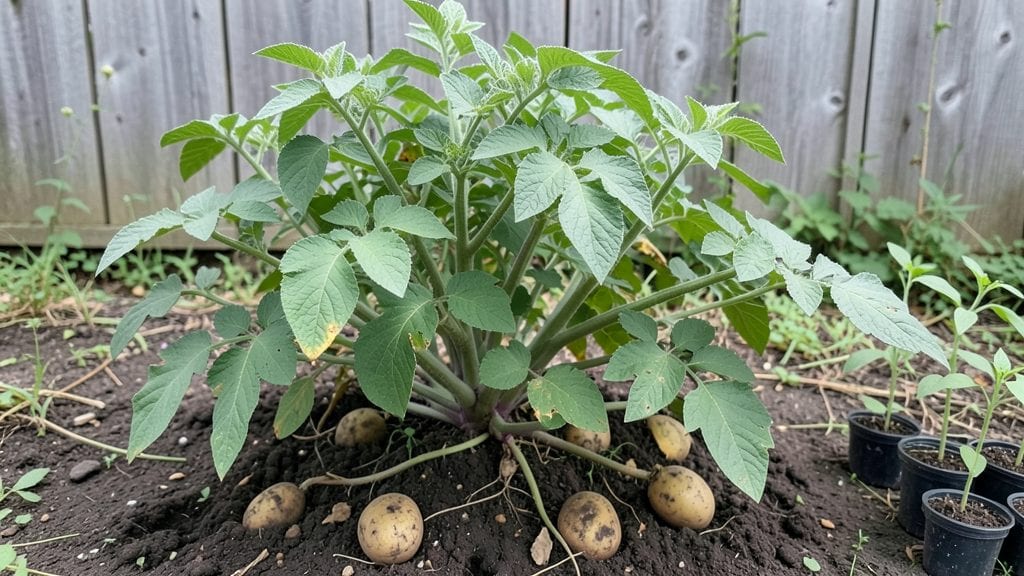
You can plant peppers and potatoes together, but they require careful spacing and disease prevention to thrive safely. Keep them at least 18 inches apart, use raised beds or mulch to block soil-borne pathogens like blight, and avoid planting them in the same spot year after year.
While peppers and potatoes can coexist in the garden, their shared vulnerabilities—like late blight and Colorado potato beetles—make proximity risky. 🌱 The key is creating physical barriers: raised beds or thick mulch layers disrupt disease spread through soil contact.
I’ve seen gardens where peppers thrived near potatoes only when separated by at least 2 feet and planted in different soil zones. Rotating crops annually also breaks pest cycles, so if you love both, plan a 3-year cycle before replanting either in the same area.
For extra protection, interplant with basil or marigolds—both repel pests naturally while improving air circulation. The trade-off? Peppers need consistent moisture while potatoes prefer drier soil, so monitor soil conditions closely. When done right, this combo can actually boost your harvest by filling vertical space efficiently.
💡 In This Article
- Companion Planting Risks for Peppers and Potatoes
- Safe Gardening Layouts for Peppers and Potatoes
Companion planting risks for peppers and potatoes
The Colorado potato beetle is the primary culprit behind why peppers and potatoes shouldn't share space. These voracious insects target both plants—chewing through potato foliage and pepper leaves with equal enthusiasm.
The beetles lay eggs on the undersides of leaves, and their larvae can strip a plant bare in as little as 10 days.
Peppers, with their tender leaves, are particularly vulnerable to this defoliation, which stunts growth and reduces fruit production. 🔥 The beetles thrive in dense plantings, so when peppers and potatoes grow too close, the beetles find a buffet instead of scattered meals.
Fungal diseases like late blight spread even more efficiently in crowded gardens. Late blight, caused by the pathogen Phytophthora infestans, thrives in moist conditions and can travel through soil splashes or windborne spores.
When peppers and potatoes are planted within 18 inches of each other, the disease can jump between plants like wildfire. Potatoes are the original host, but peppers—especially hot varieties—can also contract the disease, leading to blackened stems and rotting fruit.
The fungus produces spores that can survive in soil for years, making consecutive planting in the same spot a recipe for disaster.
Root competition adds another layer of stress. Peppers develop a shallow but extensive root system that spreads horizontally, while potatoes grow deep, tuberous roots that need ample space to expand. When planted too close, both crops compete for the same nutrients and water, leading to stunted growth.
Peppers may produce fewer peppers, while potatoes develop smaller tubers. The soil becomes depleted faster, and both plants show signs of nutrient deficiency—yellowing leaves on peppers and poor tuber formation in potatoes. 💫
Here's what's actually happening at the soil level: Peppers and potatoes share similar nitrogen requirements, but their root structures clash. Peppers prefer consistently moist soil, while potatoes need well-draining conditions. When planted together, the soil moisture balance becomes unstable—too wet for potatoes, too inconsistent for peppers.
This imbalance stresses both plants, making them more susceptible to disease and pests. The solution lies in creating physical separation through raised beds or strategic spacing.
Consider this: In a 10-foot by 10-foot garden bed, planting potatoes along one side and peppers along the opposite edge creates natural airflow and reduces disease transmission. The key is vertical separation—peppers can grow in containers or trellises while potatoes sprawl below.
This setup mimics how these crops grow in their native habitats, where they rarely compete directly. 🌟
What most people don't realize is how soil-borne pathogens hitchhike between plants. The fungal spores from late blight can travel up to 3 feet through soil splashes during watering or rain. When peppers and potatoes share the same soil space, these spores create a continuous cycle of infection.
Even if one plant appears healthy, it can silently harbor the pathogen, waiting for the right conditions to spread. This is why organic gardeners swear by 3-year crop rotation—it starves out pathogens by breaking their life cycles.