
Plants
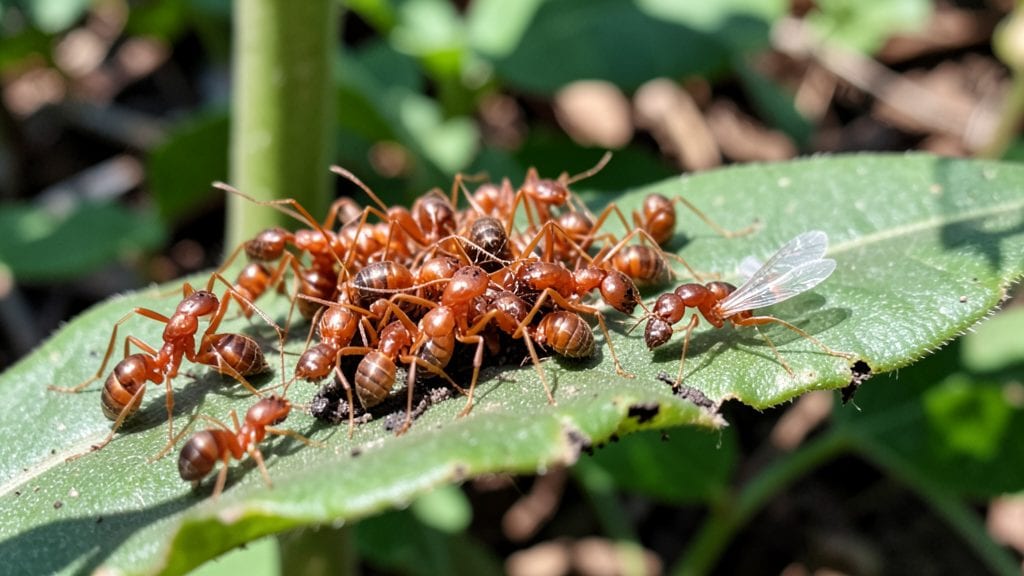
Yes, ants can hurt plants by creating an ecosystem that protects harmful pests like aphids, mealybugs, and scale insects that drain sap, stunting growth and spreading disease. Their tunneling also disrupts soil aeration and may damage roots.
Ants don’t just march through gardens—they act like tiny gardeners with a destructive agenda. 🌱 They form protective relationships with sap-sucking insects, shielding them from predators while those pests weaken plants by feeding on vital nutrients.
This creates a vicious cycle: the pests excrete sticky honeydew that attracts mold, further stressing the plant. Even without pests, their tunneling near roots can break delicate root hairs, reducing a plant’s ability to absorb water and nutrients.
The damage might start small, but over time, it adds up to stunted growth or even plant death.
What makes this tricky is that ants themselves aren’t the primary villains—they’re just enabling worse problems.
Their presence is often a red flag that something more serious is brewing in your soil or foliage. 🔍 That’s why spotting ant trails or tiny pests on leaves should trigger a closer look at your plants’ overall health.
💡 In This Article
- How Ants Indirectly Harm Plants Through Pest Farming
- Signs of Ant Infestation in Gardens and Prevention Tips
How ants indirectly harm plants through pest farming
Here's what's actually happening when ants team up with sap-sucking pests: they create a mutually beneficial relationship called mutualism. Ants like the Argentine ant or fire ant actively protect aphids, mealybugs, and scale insects by herding them to tender plant shoots.
In return, these pests produce honeydew—a sugary waste product ants harvest as food. This symbiotic bond turns ants into unintentional pest farmers, allowing harmful insects to thrive unchecked. 🔥
The damage starts with nutrient depletion. A single aphid colony can extract up to 1.5 million times its body weight in plant sap daily. Over time, this saps plants of vital nutrients like nitrogen and potassium, leading to yellowing leaves and stunted growth.
The honeydew they produce doesn't just feed ants—it creates a sticky residue that attracts sooty mold, a black fungal growth that blocks sunlight from reaching leaves, further stressing the plant.
What most people don't realize is how quickly this cycle escalates. A single ant colony can protect hundreds of aphids, creating what entomologists call a "pest farm." For example, citrus trees infested with both ants and scale insects show 30-50% reduced growth rates compared to healthy trees.
The ants' protective behavior allows these pests to multiply exponentially, turning a minor issue into a full-blown infestation within weeks. 🌱
The science behind this involves chemical communication. Ants release pheromones that deter predators like ladybugs and lacewings from attacking their "livestock." Meanwhile, the pests produce alarm pheromones when threatened, signaling ants to intervene.
This chemical warfare creates an almost impenetrable defense system for the pests, allowing them to remain on plants for months without interruption.
Consider these key effects on plant health:
- Nutrient depletion: Sap-sucking pests remove essential nutrients faster than plants can replenish them
- Honeydew buildup: Sticky residue can coat leaves, blocking photosynthesis and attracting mold
- Disease spread: Wounded plants become more susceptible to fungal and bacterial infections
- Root damage: Ant tunnels near roots break delicate root hairs, reducing water absorption by up to 40%
The most visible sign of this damage is the black sooty mold that develops on leaves, often accompanied by yellowing foliage and stunted new growth. What starts as a few ants becomes a full-blown ecosystem that systematically weakens your plants over time.
The key factor is understanding this isn't just about ants—it's about the destructive partnership they create with these tiny but powerful pests. ✨