
Companion Plants
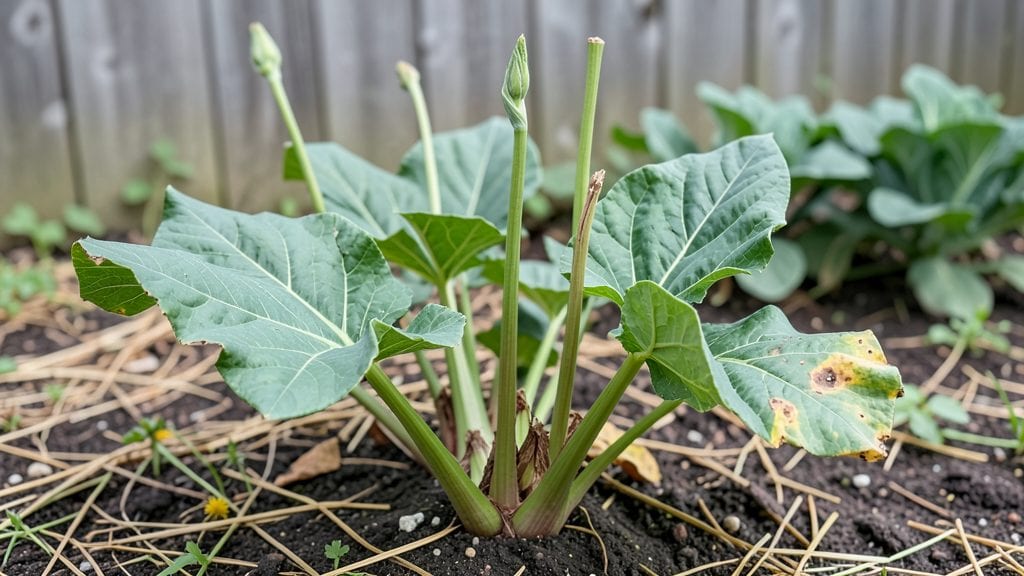
When rhubarb plants bolt unexpectedly, your harvest vanishes before it begins. 🌱 I’ve watched my own plants send up those stubborn flower stalks—turning crisp, tangy stalks into bitter, woody spears—just when they should’ve been at their peak.
The good news? This isn’t a death sentence for your crop, but it does demand quick action.
Bolting happens when rhubarb senses stress—whether from heat, age, or poor growing conditions. The plant redirects energy into flowering instead of producing those sweet, ruby-red stalks you crave. Young plants bolt more easily, but even mature ones can rebel if summer temperatures climb too high.
The key is catching the signs early: smaller leaves, rapid stalk growth, or that telltale flower bud peeking through.
Here’s the game-changer: snip those stalks at the base the moment you spot them. It won’t kill the plant, but it forces it to refocus on leaf and stalk growth. Pair that with afternoon shade during heatwaves, and you’ll buy yourself another month of harvest.
For next season, plant in a cooler microclimate or choose bolt-resistant varieties like ‘Victoria’ or ‘Canadian Red.’
Even if your plant bolts, don’t toss it—just adjust your expectations. The leaves remain edible (though less tender), and with proper care, your rhubarb can bounce back stronger. The real loss is the stalks, not the plant itself. Let’s turn that frustration into a foolproof strategy for next year’s harvest.
📚 In This Guide
- What you need
- Instructions
- Tips and common mistakes
- Wrapping up and next steps
What you need
- ● Pruning shears or sharp bypass pruners – Choose sterilized tools with 4-6 inch blades for clean cuts.
- ● Garden gloves – Nitrile or leather (thick enough to protect against thorns and sap).
- ● Disinfectant (70% isopropyl alcohol or bleach solution) – 1 part bleach to 9 parts water for sterilizing tools.
- ● Compost bin or trash bag – For disposing of flower stalks and diseased foliage.
- ○ Garden twine or plant ties (optional but helpful) – 3-4 ft lengths to secure heavy stalks if needed.
- ● Timing – Act within 24-48 hours of spotting flower stalks (the sooner, the better!).
- ● Weather check – Wait for a dry, sunny day to minimize sap splatter and disease risk.
- ● Healthy plant assessment – Ensure your rhubarb has no signs of disease (e.g., black spots, wilting) before proceeding.
- ● Plant food (balanced 10-10-10 or compost) – 1 cup per plant to replenish nutrients after pruning.
- ● Mulch (straw or wood chips) – 2-3 inches thick to protect roots and retain moisture.
- ● Plant marker or label – To track rhubarb varieties and pruning dates.
How to prevent rhubarb bolting and preserve your harvest
Here’s the straightforward method I’ve used for years to keep rhubarb plants focused on leaf production instead of flowering.
🌿 Step 1: Identify and Remove Flower Stems Early
Bolting rhubarb sends up tall, flower-stalk shoots that steal energy from your harvest. The key is catching these early—as soon as they’re 2-3 inches tall. I check my plants weekly in spring, running my fingers along the crown to spot the first signs of flower stalks before they get tall enough to notice.
Use clean, sharp pruning shears to cut the stalk at the base. Don’t pull—this can damage the crown. If you miss one, check again in 3-5 days; new shoots can appear quickly. The sooner you remove them, the more energy your plant puts into leaf growth instead of reproduction.
✂️ Step 2: Prune Aggressively During Active Growth
Once your rhubarb is established, prune 10-15% of the oldest leaves in early spring to encourage new, vigorous growth. I start with the largest, outermost leaves—these are the oldest and least productive. Use your shears to cut them at the base, leaving the younger, inner leaves to continue photosynthesizing.
This isn’t just about flower prevention—it’s about keeping your plant healthy. Overcrowded leaves compete for sunlight and nutrients, making your rhubarb more prone to disease and stress. After pruning, water deeply to help the plant recover and redirect energy to leaf production.
☀️ Step 3: Manage Light and Space for Optimal Growth
Rhubarb bolting is often a response to stress, including poor light or overcrowding. Ensure your plants get full sun (6+ hours daily) and have at least 3 feet of space between crowns. If your garden is shady, focus on removing flower stalks even more aggressively—light deprivation makes plants more likely to bolt.
I also mulch heavily with 2-3 inches of organic mulch (like straw or shredded leaves) to keep the soil cool and moist. This reduces stress and gives your rhubarb the stable conditions it needs to focus on leaf growth. Avoid fertilizing heavily in spring—too much nitrogen can actually encourage flower production.
🌱 Step 4: Divide Crowded Crowns Every 3-4 Years
Older rhubarb crowns become overcrowded, which stresses the plant and triggers bolting. Every 3-4 years, dig up the entire crown in early spring or fall. Use a sharp spade to slice the crown into sections, ensuring each piece has at least 1-2 buds. Replant the divisions immediately in fresh soil.
This rejuvenates your plants and gives them space to grow without competing for resources. I’ve found that divided rhubarb bolts far less and produces thicker, more flavorful stalks. Just be gentle—rhubarb roots are fragile, and rough handling can set back recovery time.
⏰ Step 5: Monitor and Adjust Through the Season
Even with the best care, some rhubarb plants will bolt. If you see a flower stalk you missed, act fast—cut it immediately, even if it’s already tall. The plant won’t recover the energy lost, but you’ll prevent future bolting by removing the stress signal.
By late summer, reduce watering slightly to signal the plant it’s time to slow down for dormancy. This helps prevent late-season stress, which can also trigger bolting. A well-managed rhubarb plant will reward you with years of harvests—just stay vigilant about those early flower stalks!
Tips & tricks for preventing rhubarb bolting
A few key strategies will help you keep your rhubarb plants producing delicious stalks instead of wasting energy on flowers. Here's what I've learned from years of gardening:
Early Detection is Everything: In Step 1, when you're checking for flower stalks, don't wait until they're 2-3 inches tall—start looking when they're just tiny bumps. I use my fingernails to gently probe the crown weekly in spring. Those early flower buds are often no bigger than a pencil eraser, but removing them at this stage prevents the plant from investing energy in flower production. Remember, the goal is to redirect that energy back to leaf growth.
Pruning Technique Matters: When you're pruning 10-15% of the oldest leaves in Step 2, focus on the largest, most mature leaves first. These are the ones that are least efficient at photosynthesis and often compete with younger leaves for resources. I make a clean cut at the base, leaving about 1/4 inch of stem attached. This prevents disease entry points while still allowing the plant to redirect energy to newer growth. Don't be afraid to get aggressive—your plant will thank you with thicker, more flavorful stalks.
Mulching Strategy: For Step 3, when you're applying that 2-3 inches of organic mulch, consider using straw instead of leaves. Straw breaks down more slowly and provides better insulation against temperature fluctuations. I find that straw mulch helps maintain consistent soil moisture while preventing those late-season temperature swings that can trigger bolting. Just make sure to keep the mulch 2-3 inches away from the crown to prevent rot.
Division Timing Insight: When you're dividing crowded crowns every 3-4 years in Step 4, aim for early spring or fall when the plant is dormant. I've found that dividing in early spring gives the new plants a full growing season to establish before winter, while fall division allows them to settle in before the cold. Either way, be gentle with those fragile roots—rough handling can set your plants back for months. Use a sharp spade and work quickly to minimize stress.
Pro Tips for Bolting Rhubarb Plants
- A few key strategies will help you keep your rhubarb plants producing delicious stalks instead of wasting energy on flowers.
- Early Detection is Everything: In Step 1, when you're checking for flower stalks, don't wait until they're 2-3 inches tall—start looking when they're just tiny bumps.
- Pruning Technique Matters: When you're pruning 10-15% of the oldest leaves in Step 2, focus on the largest, most mature leaves first.
Frequently asked questions
Got questions about bolting rhubarb and how to keep your plants productive? You’re not alone! Here are some of the most common concerns—and their solutions—to help you save your harvest and enjoy fresh rhubarb all season.
Why does my rhubarb keep bolting even after I cut the flower stalks?
Rhubarb bolts due to stress, age, or environmental triggers like heat or drought. Cutting flower stalks slows bolting but doesn’t always stop it. For stubborn plants, try shading them with shade cloth (30-50%) or relocating them to a cooler, more consistent spot. Older plants (5+ years) bolt more frequently—consider dividing them every 3-4 years to rejuvenate growth.
Is it too late to save my rhubarb if it’s already flowering?
Not necessarily! If the stalks are small (<6 inches), you can still snip them off at the base to redirect energy back to leaf production. For larger stalks, remove them entirely to avoid weakening the plant. Pro tip: Bolting in early spring is less damaging than late-season blooms, so timing matters—act fast in summer!
Can I still harvest rhubarb after it bolts?
Yes, but focus on young, tender stalks (under ½ inch thick) for the best flavor and texture. Avoid over-harvesting, as a bolting plant is already stressed. Prioritize leafy regrowth over flower stalks—leaves contain oxalic acid (toxic in large amounts) but can be composted or used as mulch.
What’s the best way to divide rhubarb to prevent future bolting?
Divide rhubarb every 3-5 years in early spring (before new growth) or fall. Dig up the crown, separate the youngest, most vigorous sections (with 2-3 eyes), and replant them 2-3 feet apart. Discard the oldest, woody center—this resets the plant’s energy and reduces bolting. Water well after transplanting!
Will mulching or fertilizing stop my rhubarb from bolting?
While mulch (straw or wood chips) helps retain moisture and cool roots, it won’t fully prevent bolting. For fertilization, use a balanced 10-10-10 or low-nitrogen option (like compost or manure) in early spring. Avoid high-nitrogen fertilizers—they encourage leafy growth but can trigger early bolting in some varieties.
Are there rhubarb varieties less prone to bolting?
Some varieties are bolting-resistant or slower to flower, like:
- Victoria (classic, reliable)
- Canada Red (cold-hardy, slower to bolt)
- German Wine (tolerates heat better)
Wrapping up and next steps
Bolting rhubarb doesn’t have to ruin your harvest—with the right techniques, you can save your plants and enjoy a bountiful crop for years to come! 🌱 Whether you’re pinching, pruning, or adjusting care, every action keeps your rhubarb focused on those delicious stalks instead of flowers.
Now that you’re armed with the know-how, take action—check your plants this season, and give them the TLC they deserve.
Ready to bolt-proof your rhubarb patch? Start by inspecting your plants now and implementing just one of the methods you’ve learned. Your future harvest (and your taste buds!) will thank you. 😊