Planting
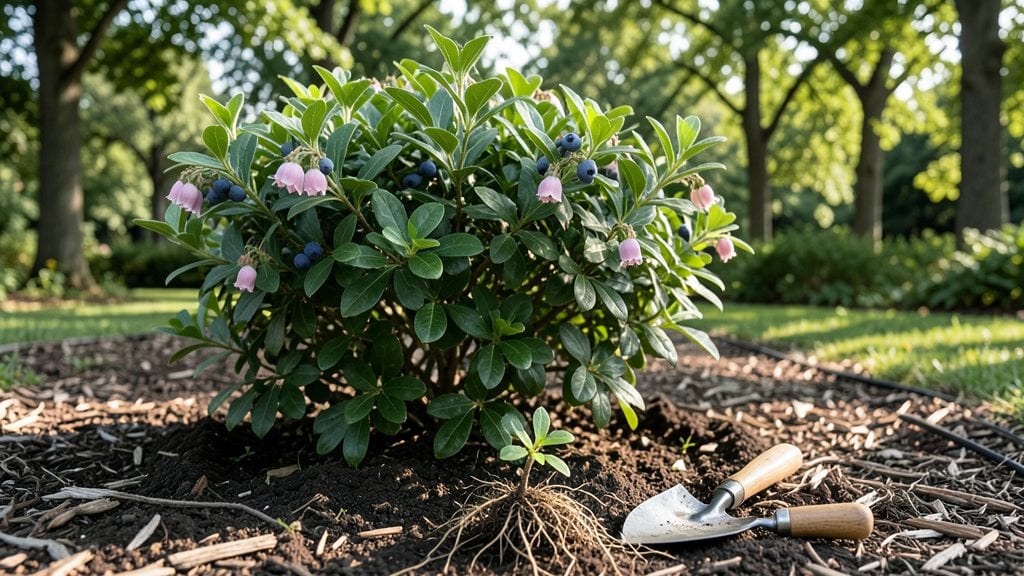
Here are some blueberry planting tips to get started: begin with soil that mimics their natural bog habitat—acidic, rich, and moist. I learned the hard way that regular garden soil leaves bushes stunted and fruitless.
The right mix of peat moss, sulfur, and compost creates the perfect environment for these finicky plants to thrive, even in small containers.
Blueberries need full sun, consistent moisture, and a pH between 4.5 and 5.5—think of it as creating a mini swamp in your yard or pot. Most gardeners overlook the soil test, but skipping it means missing the mark on acidity, which directly affects fruit production.
With the right prep, you’ll see strong new growth within weeks and juicy berries by next summer.
📚 In This Guide
- What you need
- Instructions
- Tips and common mistakes
- Wrapping up and next steps
What you need
- ● Blueberry plants: Purchase 2–4 healthy nursery-grown bushes (choose varieties like Rabbiteye, Southern Highbush, or Northern Highbush based on your climate zone).
- ● Well-draining soil: 1–2 cubic yards of acidic soil mix (pH 4.5–5.5). Use a blend of peat moss, pine bark fines, and sand (or a pre-mixed blueberry soil mix).
- ● Organic mulch: 3–4 inches of pine straw, wood chips, or leaf mold to retain moisture and acidify soil.
- ● Fertilizer: Acid-loving plant fertilizer (e.g., Osmocote or Miracle-Gro Azalea/Camellia) for planting.
- ● Ammonium sulfate (10–20 lbs per 100 sq ft) for ongoing acidity.
- ● Pruning tools: Sharp bypass pruners (for clean cuts).
- ● Loppers (for thicker branches).
- ● Watering supplies: Drip irrigation system (recommended) or a hose with a gentle spray nozzle.
- ● Water storage (e.g., 5-gallon bucket for initial watering).
- ● Support stakes: 3–4 bamboo stakes or metal rods (6 ft tall) for young plants.
- ● Soil pH test kit to monitor acidity levels (aim for 4.5–5.5).
- ● Blueberry cage or trellis for larger varieties (e.g., Rabbiteye).
- ● Composted manure (e.g., alfalfa or cow manure) for extra nutrients.
- ● Bird netting to protect berries from hungry critters.
- ● Garden gloves (to protect your hands from thorns and soil).
Step-by-Step instructions for planting blueberries
Here's how to get your blueberry bushes off to the best possible start—soil prep is everything.
Choose the Right Location and Soil Type
Blueberries need acidic soil with a pH between 4.5 and 5.5—this is non-negotiable. Test your soil before planting; if it's too alkaline, you'll need to amend it with sulfur or peat moss. I always pick a spot with morning sun and afternoon shade to protect the berries from scorching while still giving the plant enough light.
Dig a hole twice as wide as the root ball but only as deep as the container it came in. Loosen the soil at the bottom of the hole with a garden fork—this helps roots spread without struggling. If your soil drains poorly, mix in 1 part sand for every 3 parts native soil to improve aeration.
Prepare the Planting Hole with Acidic Amendments
Fill the bottom of the hole with a mix of 2 parts peat moss and 1 part pine bark fines. This keeps the soil acidic and mimics the natural forest floor where blueberries thrive. Avoid compost—it raises pH too much. Spread the amendments evenly and mix them into the native soil at the hole's base.
Place the blueberry plant in the center, ensuring the top of the root ball sits just above soil level. Fill the hole halfway with the amended soil, then water deeply to settle everything. This first watering removes air pockets and helps the roots make contact with the soil. I like to add a slow-release acid-loving plant fertilizer at this stage to give the bush a nutrient boost.
Mulch and Water for Long-Term Health
Spread a 3-inch layer of pine needles or wood chips around the base of the plant, keeping it 6 inches away from the stem. Mulch retains moisture, suppresses weeds, and slowly acidifies the soil as it breaks down. Avoid fresh wood chips—they can rob nitrogen from the soil and harm young roots.
Water the plant deeply once a week during the first growing season, aiming for 1 inch of water per week. Let the top 2 inches of soil dry out between waterings to prevent root rot. Blueberries are drought-tolerant once established, but young plants need consistent moisture to develop strong roots. You'll know you're doing it right when the soil around the plant stays evenly moist but not soggy.
Prune and Monitor for First Year Growth
In the first year, focus on removing any dead or crossing branches to improve airflow. Blueberries don’t need heavy pruning early on—just shape the bush lightly. I trim back any stems that grow taller than 12 inches to encourage bushier growth. This prevents the plant from putting all its energy into a single weak stem.
Watch for new shoots emerging from the base—these are called "suckers" and should be removed immediately. They drain energy from the main plant. By late fall, add a 2-inch layer of fresh mulch to protect roots from freezing and maintain soil acidity over winter. Your goal is a well-supported, compact bush by the end of the first year.
Tips & tricks for planting blueberries like a pro
Planting blueberries right from the start means paying attention to details that most gardeners overlook—especially when it comes to soil and location. Here are my go-to tips to ensure your bushes thrive.
Soil pH is everything: That 4.5 to 5.5 pH range isn't just a suggestion—it's critical for blueberries to absorb nutrients. I test my soil twice: once before planting and again in early spring. If your soil tests higher than 6.0, you'll need to amend it with sulfur or peat moss for at least 6 months before planting. Don't skip this step—blueberries simply won't grow well in alkaline soil.
Location matters more than you think: The morning sun and afternoon shade recommendation in Step 1 isn't just about temperature—it's about protecting the delicate berries from afternoon sunburn while still giving the plant enough light to photosynthesize. I've seen blueberries planted in full sun struggle with sun-scalded leaves, even when the weather seemed mild. If you only have full sun options, consider planting near a building or tall plants that provide natural afternoon shade.
Root ball placement is a game-changer: When placing your blueberry plant in Step 2, make sure the top of the root ball sits just above soil level—this prevents water from pooling around the stem and causing rot. I like to use a level tool to check this, especially when planting multiple bushes. Also, avoid pressing down on the soil after planting—this can compact it and make it harder for roots to spread.
Mulching is an ongoing process: That initial 3-inch layer of pine needles or wood chips in Step 3 isn't a one-time thing. I add a fresh 1-inch layer every spring to maintain acidity and moisture. Over time, the mulch breaks down and becomes part of the soil, so you're constantly improving your planting site. Just remember to keep mulch 6 inches away from the stem to prevent rot.
Pro Tips for Blueberry Planting Tips
- Planting blueberries right from the start means paying attention to details that most gardeners overlook—especially when it comes to soil and location.
- Soil pH is everything: That 4.5 to 5.5 pH range isn't just a suggestion—it's critical for blueberries to absorb nutrients.
- I've seen blueberries planted in full sun struggle with sun-scalded leaves, even when the weather seemed mild.
Frequently asked questions
Got questions about growing your own blueberries? You’re not alone—planting these delicious berries can seem tricky at first! Here are answers to the most common questions to help you get started on the right foot.
When is the best time to plant blueberry bushes?
For most regions, late fall to early spring (before buds break) is ideal. This gives roots time to establish before summer heat. In warmer climates, plant in late winter to avoid stress. Avoid planting in summer, as high temps can shock young bushes.
How much water do blueberry bushes need?
Blueberries thrive with 1–1.5 inches of water per week, especially during the first year. Mulch around the base to retain moisture, but avoid overwatering—soggy soil leads to root rot. Drip irrigation works best, as it delivers water directly to roots without wetting leaves (which can cause disease).
Can I grow blueberries in containers?
Dwarf varieties
(like ‘Top Hat’ or ‘Peach Sorbet’) are perfect for pots. Use a well-draining acidic mix (like peat moss + pine bark) and a container at least 12–18 inches deep. Place in full sun and fertilize with acid-loving plant food every 4–6 weeks.
Why aren’t my blueberry bushes producing fruit?
Common culprits include:
- Improper pollination: Plant two compatible varieties (e.g., ‘Duke’ + ‘Bluecrop’).
- Wrong soil pH: Test and amend to 4.5–5.5 with sulfur or peat moss.
- Young age: Bushes often take 2–3 years to bear fruit.
- Over-fertilizing: Too much nitrogen = leafy growth, no fruit.
Patience and proper care pay off—healthy bushes = sweet berries!
Do blueberry bushes need winter protection?
Most varieties handle USDA Zones 4–7 with minimal care, but young bushes or tender varieties (like rabbiteye) benefit from:
- A 3–4 inch mulch layer (straw or pine needles) to insulate roots.
- Wrapping the canes in burlap in extreme cold (<10°F).
- Avoiding late-season pruning, which exposes fresh growth to frost.
In Zone 3 or colder, opt for cold-hardy varieties like ‘Patriot’ or ‘Jersey.’
Wrapping up and next steps
You’ve got everything you need to grow juicy, thriving blueberries—from the right soil prep to choosing the perfect spot! 🌱 Remember, the key is patience, proper drainage, and a little acidity love.
With these three soil secrets and a dash of care, your bushes will reward you with bountiful harvests for years to come.
Now that you’re ready to dig in, grab your gloves and start planting! Want to go further? Check out our guide on blueberry pruning tips to keep your bushes happy and productive. Happy gardening! 🌟