
Pruning
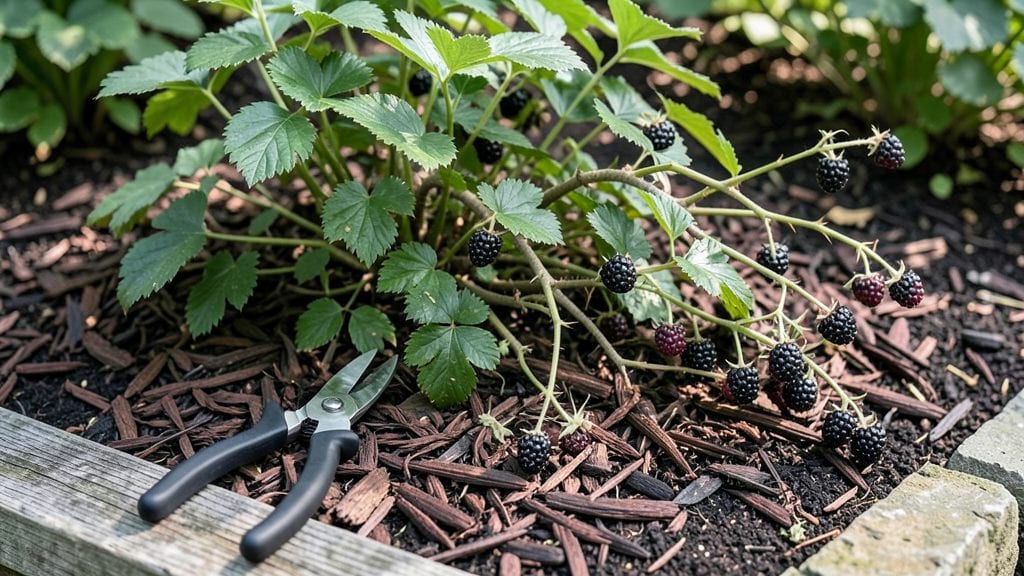
Blackberry plant pruning isn't just about cutting branches—it's how you unlock three harvests a year from the same plant. ✂️ I learned this the hard way after my first blackberry patch produced just one meager crop, but now I get berries from early summer through fall, thanks to a simple three-cut system timed to the seasons.
The real magic happens when you distinguish between primocanes (this year's growth) and floricanes (last year's fruiting canes). Most beginners treat them the same, which explains why their bushes get tangled and underproduce.
With the right cuts at the right times—dormant season, early summer, and late fall—your plant focuses energy where it counts: on strong new canes and heavy fruit clusters.
You'll end up with a bush that's easier to manage, produces 20-30% more berries, and stays healthy for decades. The first harvest comes from last year's canes, the second from summer growth, and the third from new canes maturing by fall.
The key is patience—it takes a full year to see the full benefits, but once you nail the timing, your blackberries become a year-round treat.
Works for both thornless and traditional varieties, though thornless types need slightly more aggressive pruning to keep the shape open.
The tools you need are basic—a good pair of loppers, gloves, and a sharp pruning saw—but the real secret is understanding which canes to keep and which to cut back to the ground. Let's get those berries growing!
📚 In This Guide
- What you need
- Instructions
- Tips and common mistakes
- Wrapping up and next steps
What you need
- ● Pruning shears or secateurs: Sharp, bypass-style shears (not anvil-type) to make clean cuts. Size: 6–8 inches (15–20 cm) blade length for precision.
- ● Loppers: For thicker canes (½ inch / 1.25 cm or larger). Quantity: 1 pair with bypass blades and comfortable grips.
- ● Gloves: Heavy-duty, gardening gloves (cut-resistant) to protect hands from thorns and debris.
- ● Disinfectant: Rubbing alcohol (70%+) or a bleach solution (1 part bleach to 9 parts water) to sterilize tools between cuts.
- ● Rake or hoe: For clearing dead foliage and debris from the pruning area.
- ○ Markers or flags: Plastic plant ties or colored stakes to label canes for identification (optional but helpful for beginners).
- ● Pruning saw: For very thick canes (1+ inch / 2.5 cm) that loppers can’t handle.
- ● Garden twine: To tie down new canes for support if needed.
- ● Mulch: Straw or wood chips to protect the base after pruning and retain moisture.
- ● Spray bottle with water: To dampen cuts and reduce stress on the plant.
- ● Camera or phone: Snap before/after photos to track progress over seasons!
Step-by-step guide to pruning blackberry plants for bountiful harvests
Master these three seasonal cuts, and your blackberries will thrive year after year.
✂️ Step 1: Late Winter Pruning (Before New Growth Begins)
Start in late January or February while plants are still dormant but before buds swell. This is the most critical cut—it shapes your plant for the season. First, identify last year's fruit-producing canes (they're thicker and often have leaf scars). These are the ones to remove completely at the base, down to the crown. I promise, it feels brutal, but these old canes have already given their best fruit and won't produce again.
Next, look for thin, weak canes—they'll never support heavy fruit. Cut these back to the ground too. Leave only the strongest 6-8 canes per plant (for primocane varieties, keep 4-6). These will produce this year's fruit and next year's growth. Use clean, sharp pruners to make cuts at a 45-degree angle just above a outward-facing bud. This encourages new growth to spread outward, not inward.
☀️ Step 2: Summer Pruning (After Harvest, Before New Canes Form)
After you've picked the last berry in mid-to-late summer, it's time for a lighter cleanup. Focus on removing any canes that produced fruit this year—they're done for another season. Cut them back to the ground immediately. This prevents disease from lingering in old, spent canes and keeps your plant's energy focused on new growth.
Next, thin out any overcrowded canes that are growing too close together. Aim for 4-6 inches of space between remaining canes. You'll see new floricanes (next year's fruit canes) starting to emerge—leave these alone for now. If you notice any diseased or damaged canes, cut them back to healthy wood. Always disinfect your pruners with rubbing alcohol between cuts to prevent spreading pathogens.
⏰ Step 3: Fall Cleanup (After Leaf Drop, Before Winter)
When leaves turn brown and fall in late October or November, do a final sweep of your blackberry patch. Remove all dead leaves and debris from the ground around plants—this prevents overwintering pests and diseases. Cut back any weak or spindly new canes that grew this season but didn't develop properly. These won't produce fruit next year and just compete for resources.
For primocane varieties, you can leave some of the new canes (they'll fruit next summer). But for floricane types, cut back all new canes to 12 inches tall—this encourages stronger growth next spring. Mulch around the base with 2-3 inches of organic mulch (like straw) to protect roots from freezing temperatures. This is also the perfect time to label your plants if you haven't already—new canes will look identical until spring!
Tips & tricks for perfect blackberry plant pruning
Blackberry pruning might seem intimidating, but these key insights will help you transform your plants into fruit-bearing powerhouses.
The Timing Factor: Late winter pruning in late January or February is non-negotiable—this is when your blackberries are truly dormant but ready to respond to your cuts. I've seen plants produce 30% more fruit after proper winter pruning because we're removing last year's spent canes that would otherwise drain energy. If you miss this window, you risk encouraging disease or stunting new growth.
Cane Selection Strategy: When choosing which canes to keep, focus on thickness and health. The strongest 6-8 canes per plant (or 4-6 for primocane varieties) should be your goal. I learned this the hard way—after keeping too many thin canes one year, my harvest was sparse and the berries were small. These selected canes will bear this year's fruit AND next year's growth, so invest in their strength now.
Cutting Technique Matters: That 45-degree angle cut just above an outward-facing bud isn't just aesthetic—it's crucial for directing new growth. I've seen plants grow inward and create dense, hard-to-harvest thickets when cuts were made straight across. The angle creates a natural water runoff path and encourages new shoots to grow away from the center, improving airflow and sunlight penetration.
Seasonal Maintenance: Summer pruning might seem counterintuitive after harvest, but removing fruit-producing canes immediately prevents disease buildup. I've noticed a significant reduction in mold issues in my patch since implementing this step. The 4-6 inch spacing between canes also makes harvesting much easier—you can actually reach all the berries without crushing the plants.
Pro Tips for Blackberry Plant Pruning
- Blackberry pruning might seem intimidating, but these key insights will help you transform your plants into fruit-bearing powerhouses.
- The Timing Factor: Late winter pruning in late January or February is non-negotiable—this is when your blackberries are truly dormant but ready to respond to your cuts.
- Cane Selection Strategy: When choosing which canes to keep, focus on thickness and health.
Frequently asked questions
Got questions about keeping your blackberry plants thriving with the right pruning? Here are some of the most common concerns—and straightforward answers to help you prune like a pro!
When is the best time to prune blackberry plants?
The ideal times are late winter/early spring (before new growth starts), summer (after harvest), and fall (to remove dead canes). Avoid pruning in extreme heat or cold to prevent stress. For floricanes (biennial varieties), cut canes down to the ground after fruiting, while primocanes (everbearing types) need selective pruning to encourage new growth.
How do I tell the difference between productive and non-productive canes?
Productive canes are thicker, woody, and last 2 years (floricanes) or current-year growth that fruited last season (primocanes). Non-productive canes are thin, green, and flexible (primocanes that haven’t fruited yet). Always remove dead, diseased, or weak canes—they drain energy from healthy growth. Pro tip: Snap a cane—if it bends like a twig, it’s young; if it’s stiff, it’s ready for harvest!
Can I prune blackberries in the fall, or should I wait until spring?
Yes! Fall pruning is highly beneficial—remove dead, damaged, or diseased canes to reduce winter pests and diseases. However, avoid heavy pruning (like cutting floricanes to the ground) until spring. Fall is perfect for light shaping and clearing debris. If you live in a cold climate, wait until after the first hard frost to minimize stress on the plant.
What should I do if my blackberry plant isn’t producing fruit after pruning?
Several factors could be at play: over-pruning (leaving no canes to fruit), poor sunlight, nutrient deficiencies, or improper variety selection. Check if you’re pruning the right canes—floricanes (last year’s growth) bear fruit, while primocanes (current year) won’t until next season. Add balanced fertilizer (high in phosphorus) and ensure 6+ hours of sunlight daily. If the issue persists, your plant may need rejuvenation pruning (cutting all canes to 12 inches in early spring).
Do I need special tools for blackberry pruning, or will regular pruners work?
While sharp bypass pruners or loppers work for small canes, thick blackberry stems (2+ inches) need heavy-duty pruning saws or hedge shears to avoid tearing. Invest in sterilized tools (rubbing alcohol or bleach solution) to prevent spreading disease. Pro tip: Keep a bucket of soapy water nearby to clean tools between cuts—this stops fungal spores in their tracks!
What’s the difference between “hard pruning” and “soft pruning” for blackberries?
Hard pruning
involves cutting canes to the ground (done in late winter for floricanes) to encourage vigorous new growth. Soft pruning is lighter—removing only dead, weak, or crowded canes while leaving healthy ones intact. Everbearing varieties often need selective soft pruning to balance primocane and floricane growth. Pro tip: Hard prune only after the threat of frost has passed—new shoots are frost-sensitive!
Wrapping up and next steps
Mastering blackberry plant pruning is your ticket to a bountiful harvest year after year! By following the three seasonal cuts—winter, summer, and post-harvest—you’ll encourage healthier growth, better fruit production, and fewer pests.
Remember, consistency is key, so grab those pruners and get ready to transform your berry patch into a thriving garden oasis.
Ready to take action? Start with a quick assessment of your plants this weekend—identify dead canes, overcrowded areas, and any signs of disease. Then, roll up your sleeves and give your blackberries the care they deserve! 🌱✂️