
Fertilization
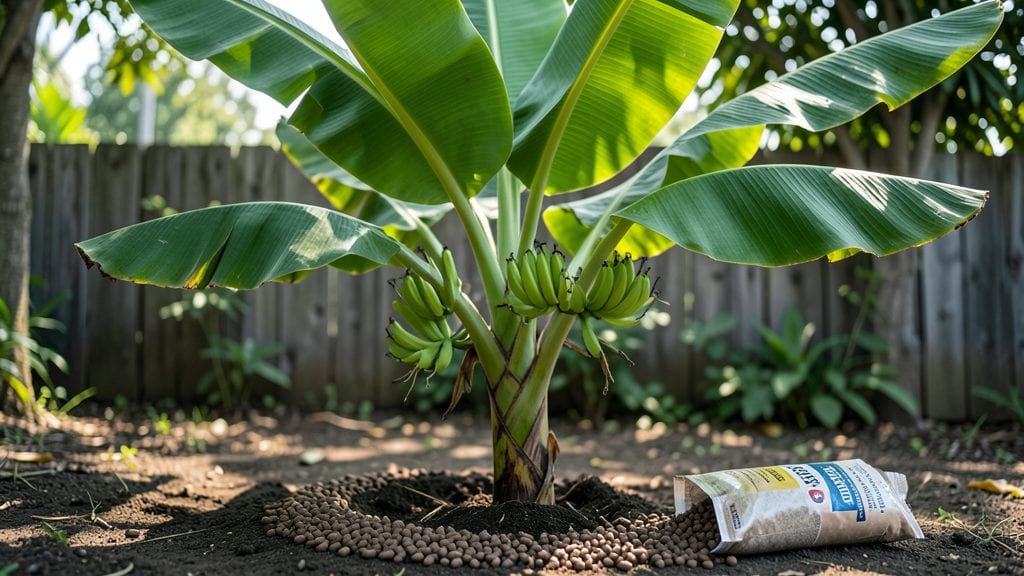
The right banana plant food saved my struggling plants last summer—once I swapped in a nitrogen-rich formula. That single change turned their ragged leaves into glossy, broad fronds and doubled my fruit yield.
The secret isn’t just throwing any fertilizer at them; it’s timing, balance, and knowing when to dial up potassium for those sweet, heavy bunches.
You’ll need a high-nitrogen fertilizer (like 34-0-5 or well-aged compost) for leaf growth, but banana plants also crave potassium as they fruit. I start with a balanced feed every 4-6 weeks during active growth, then switch to a potassium-heavy mix (like 10-10-20) when flower stalks appear.
Container-grown plants need this even more—they can’t scavenge nutrients like in-ground ones.
The payoff? Thick, velvety leaves that repel pests and fruit clusters so heavy they bend the stems. You’ll spot the difference within weeks: no more yellowing fronds or stunted growth.
Just watch for overfeeding—soggy soil or burned roots are dead giveaways. I’ll show you how to read your plant’s signals and adjust on the fly.
Whether you’re growing in Florida heat or a frost-free container in Zone 8, the same principles apply. Tropical varieties need more frequent feeding, while hardier types can go longer between meals. Let’s get those plants eating right—your future smoothies depend on it.
📚 In This Guide
- What you need
- Instructions
- Tips and common mistakes
- Wrapping up and next steps
What you need
- ● Balanced fertilizer (10-10-10 or 20-20-20): 1–2 lbs (per 100 sq ft) – for foundational nutrients.
- ● High-nitrogen fertilizer (e.g., blood meal, fish emulsion, or urea): 1 lb (per plant) – bananas are hungry for nitrogen! 💪
- ● Potassium-rich fertilizer (e.g., potassium sulfate or banana peel tea): ½ lb (per plant) – boosts fruit production.
- ● Compost or well-rotted manure: 5–10 gallons (per plant) – improves soil structure and microbial life.
- ● Banana peels: 3–5 peels (per feeding) – a free, nutrient-packed treat!
- ● Garden gloves: 1 pair – protects your hands from sharp edges and fertilizers.
- ● Trowel or small shovel: 1 – for mixing soil and applying fertilizers.
- ● Watering can or hose with a gentle spray nozzle: 1 – banana plants love hydration!
- ○ pH testing kit: 1 (optional but helpful) – bananas thrive in slightly acidic soil (pH 5.5–7.0).
- ● Mulch (straw, wood chips, or leaves): 2–3 inches – retains moisture and regulates temperature.
- ● Well-draining soil: Banana plants hate soggy roots. Mix in perlite or sand if needed.
- ● Sunny spot: At least 6–8 hours of direct sunlight daily (or a grow light for indoor plants).
- ● Watering schedule: Consistent moisture—banana plants drink a lot! 💦
- ● Patience: Banana plants take 9–12 months to bear fruit, but the wait is worth it!
Step-by-Step guide to feeding banana plants for maximum growth
Here’s how to nourish your banana plant for vibrant foliage and heavy fruit production.
Understand the Nutritional Needs of Banana Plants
Banana plants are heavy feeders, requiring a balanced fertilizer rich in nitrogen to support their rapid leaf growth. The key is a high-nitrogen formula (like a 30-10-10 or 20-20-20 blend) applied during active growth phases. I start feeding when new leaves begin unfurling—this signals the plant is ready to absorb nutrients efficiently. Avoid over-fertilizing with phosphorus or potassium too early; these nutrients are better suited for flowering and fruiting stages.
Your banana plant will show signs of nutrient deficiency if leaves develop yellowing between veins (a classic nitrogen deficiency) or if growth slows despite consistent watering. A well-fed banana plant produces leaves that are a deep, glossy green and grow at a steady pace. Use a soil test kit to confirm nutrient levels before applying fertilizer—this prevents overloading the plant with salts, which can stunt root development.
Prepare the Fertilizer Solution
Mix the fertilizer according to the package instructions, but dilute it to half-strength for the first application. Banana plants are sensitive to salt buildup, and a concentrated solution can damage roots. I use a water-soluble granular fertilizer for ease of application, dissolving it in a 5-gallon bucket of water before pouring it evenly around the base of the plant. Avoid getting fertilizer on the leaves, as it can cause leaf burn.
For organic options, composted manure or worm castings work well, but they require a longer breakdown period. Spread a 2-inch layer of compost around the drip line of the plant and lightly scratch it into the top 2 inches of soil. Water thoroughly after application to help nutrients penetrate the root zone. This method is slower but builds soil health over time, reducing the risk of nutrient runoff.
Apply Fertilizer During the Growing Season
Feed your banana plant every 4-6 weeks during the active growing season, which typically runs from spring through early fall. Start applications in early spring when new shoots emerge and continue until 2-3 weeks before the first frost in colder climates. In tropical regions, you can fertilize year-round, but reduce frequency to every 8-10 weeks during the dormant winter months when growth slows.
Always water the plant 24 hours before and after fertilizing to prevent root burn. You’ll know the timing is right when the soil feels moist but not soggy. If your banana plant is in a container, flush the soil with water after fertilizing to remove excess salts. Look for signs of over-fertilization, such as crispy leaf edges or wilting, which indicate salt stress.
Supplement with Organic Matter for Long-Term Health
In addition to synthetic or organic fertilizers, incorporate well-aged compost or banana peels into the soil to boost microbial activity. Banana peels contain potassium and phosphorus, which support flowering and fruiting. Chop the peels into small pieces and bury them 2-3 inches deep around the plant’s base. Over time, they’ll decompose and release nutrients gradually, improving soil structure and moisture retention.
Mulch the soil surface with 3-4 inches of straw or wood chips to conserve moisture and regulate soil temperature. This also slows nutrient leaching, ensuring your banana plant has a steady supply of food. Replenish the mulch every 3-4 months or when it breaks down. Healthy mulch will look dark and slightly decomposed, not brittle or moldy.
Adjust Feeding Based on Plant Response
Monitor your banana plant’s growth closely after each feeding. If leaves remain pale or growth stalls, increase nitrogen slightly (by 10-20%) in the next application. Conversely, if new leaves appear dark green with purple undersides, you’re overdoing it—reduce fertilizer strength or increase watering to flush excess salts. A well-fed banana plant will produce large, upright leaves with minimal yellowing or spotting.
Pay attention to the fruit development stage. Once flower buds form, switch to a balanced or phosphorus-heavy fertilizer (like a 10-20-10 blend) to encourage fruiting. You’ll notice the plant’s energy shift from leaf production to fruit swelling. Stop fertilizing entirely once fruit begins ripening, as excess nutrients can reduce sweetness and quality.
Tips & tricks for feeding banana plants for maximum growth
Nourishing banana plants properly transforms your garden from ordinary to extraordinary—here’s how to avoid common pitfalls and maximize results.
Timing is Everything: The 24-hour watering window before and after fertilizing is non-negotiable for banana plants. This timing ensures nutrients are absorbed efficiently rather than burning delicate roots. I’ve seen plants recover from under-watering but never from salt stress caused by skipping this step. For container plants, I flush the soil with water after fertilizing to prevent salt buildup—this is especially critical in tropical climates where evaporation rates are high.
Visual Cues Over Guesswork: When adjusting nitrogen levels in Step 5, focus on leaf color rather than memory. Healthy leaves should be a deep, glossy green without yellowing between veins. If you notice new growth with purple undersides, that’s your signal to reduce fertilizer strength immediately. I keep a small notebook by my banana plants to track growth patterns—this helps me spot subtle changes before they become problems.
Organic Matter Integration: The 2-inch layer of compost in Step 4 isn’t just about nutrients—it’s about creating the right soil environment. Banana plants thrive in well-draining soil with high organic content. I mix compost into the top 2 inches of soil rather than just spreading it on top, which prevents nutrient runoff and ensures roots can access the goodness. For banana peels, I chop them finely and bury them deeper than the instructions suggest—about 3 inches down—to maximize their nutrient release over time.
Seasonal Adjustments: The 4-6 week feeding schedule in Step 3 works perfectly for temperate climates, but tropical regions require a different approach. In my Florida garden, I fertilize every 8-10 weeks during winter months when growth naturally slows. The key is observing your plant’s growth rate rather than following a rigid calendar. If you see new leaves emerging in winter, it’s time to feed again—banana plants don’t follow seasonal rules like most plants.
Pro Tips for Banana Plant Food
- Nourishing banana plants properly transforms your garden from ordinary to extraordinary—here’s how to avoid common pitfalls and maximize results.
- Timing is Everything: The 24-hour watering window before and after fertilizing is non-negotiable for banana plants.
- Visual Cues Over Guesswork: When adjusting nitrogen levels in Step 5, focus on leaf color rather than memory.
Frequently asked questions
Got questions about feeding your banana plant for the best growth and fruit? Here are some common ones we hear—and the answers you need!
How often should I fertilize my banana plant?
A balanced banana plant food with high nitrogen should be applied every 4–6 weeks during the growing season (spring and summer). Reduce frequency to once every 2–3 months in fall/winter when growth slows. Over-fertilizing can burn roots—always water well before and after feeding!
What if my banana plant’s leaves turn yellow?
Yellow leaves often signal over-fertilization or nutrient imbalance. Flush the soil with water to leach excess salts, then switch to a lower-nitrogen fertilizer (like a 5-5-5 blend) for 2–3 months. Check for pests (like spider mites) too—they can stress plants and cause discoloration.
Can I use coffee grounds or banana peels as fertilizer?
Yes! Both are great organic alternatives to synthetic banana plant food. Coffee grounds add nitrogen and acidity (ideal for tropical plants), while banana peels provide potassium. Chop peels and bury them near roots, or compost both for a slow-release boost. For faster results, mix with soil or brew a "banana peel tea."
Does my banana plant need fertilizer in winter?
Banana plants are dormant in winter, so they don’t need frequent feeding. A light application of balanced fertilizer (10-10-10) in late winter (before new growth starts) is enough. Focus on watering less and protecting the plant from frost—growth will resume when temps rise!
What’s the best fertilizer for banana plants with no fruit?
If your banana plant has leaves but no fruit, it may need a potassium-rich fertilizer (like 10-10-20 or 5-5-10). Potassium supports flowering and fruit development. Pair it with a phosphorus boost (e.g., bone meal) and ensure the plant gets 6+ hours of sunlight daily to trigger blooming.
Still stumped? Drop your question in the comments—we’re happy to help your banana plant thrive!
Wrapping up and next steps
Growing a thriving banana plant is all about feeding it right—and now you’ve got the perfect nitrogen-packed formula to fuel those lush leaves and sweet fruit! 🌱 Whether you’re using organic compost, banana peels, or a balanced fertilizer blend, consistency is key.
Watch your plant reward you with healthier growth, bigger bunches, and even tastier bananas.
Ready to see real results? Start with your first application today, then keep monitoring and adjusting as your banana plant flourishes. Happy gardening—your future harvest is waiting! 🍌✨