
Planting
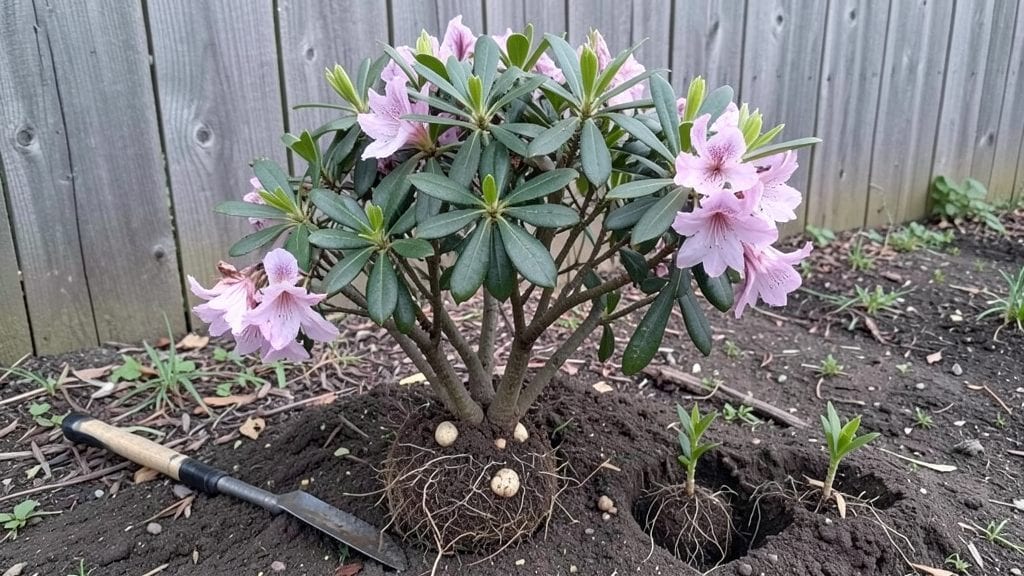
Proper azalea planting distance is the foundation of healthy, blooming shrubs 🌸 — and getting it wrong can mean years of stunted growth or disease.
Struggling with azaleas that look sparse or overcrowded? The secret to lush, vibrant blooms starts with proper spacing—yet many gardeners get this critical step wrong. Too close, and you invite fungal diseases; too far, and your garden looks like a patchy lawn.
In USDA Zone 6a, spacing depends on the variety: dwarf types need 3-4 feet apart, while standard azaleas should sit 6-8 feet from neighbors. I’ll break down exactly how to measure, adjust for soil conditions, and avoid common mistakes that ruin your blooms before they even start.
By the end, you’ll know the exact spacing for your garden layout, plus tips for companion plants and mulching that keep your azaleas thriving for decades.
Optimal azalea planting distance by variety and growth habit
Proper azalea planting distance is the foundation of a thriving garden display. Unlike many shrubs, azaleas have shallow root systems and dense foliage that demand careful spacing. Crowding leads to poor airflow, which invites fungal diseases like powdery mildew, while over-spreading creates sparse blooms.
The key? Matching your azalea variety to its mature size and growth habit—whether it's a dwarf, semi-dwarf, or standard type.
Evergreen azaleas (like Rhododendron 'Girard's Pink') and deciduous types (such as Rhododendron 'PJM') both need tailored spacing. Evergreens maintain foliage year-round, so they require more room for airflow to prevent winter burn. Deciduous azaleas, while slightly more forgiving, still need space to avoid root competition that stunts growth.
I’ve planted both types in my garden, and the difference in bloom density is night-and-day when spacing is correct.
Here’s the golden rule: Measure from the center of one plant to the center of the next. This accounts for the root flare and ensures roots aren’t crowded.
For example, a dwarf azalea (mature height: 2–4 ft) needs 3–4 feet between plants, while a standard azalea (6–15 ft tall) requires 6–10 feet. Skipping this step often leads to leggy growth and fewer flowers—something I learned the hard way with my first overcrowded Kurume azalea hedge.
| Variety Type | Mature Height | Mature Spread | Optimal Spacing (Center-to-Center) | Notes |
|---|---|---|---|---|
| Dwarf (e.g., 'P.J.M.', 'Boule de Neige') | 2–4 ft | 3–5 ft | 3–4 ft | Ideal for borders, containers, or mass plantings. Evergreen types need extra airflow. |
| Semi-Dwarf (e.g., 'Girard's Pink', 'Hino Crimson') | 4–6 ft | 5–7 ft | 5–6 ft | Perfect for foundation plantings or mid-height hedges. Deciduous types tolerate slightly closer spacing. |
| Standard (e.g., 'Broughton Pink', 'Nova Scotia') | 6–15 ft | 8–12 ft | 8–10 ft | Best for specimen plantings or woodland edges. Requires deep soil prep for root spread. |
| Hedge Planting (Any Type) | Varies | Varies | 2–3 ft apart (for sheared hedges) | Use staggered rows to reduce gaps. Prune annually to maintain shape. |
Why does root spread matter so much? Azaleas develop lateral roots that extend beyond their canopy. If you plant them too closely, these roots compete for water and nutrients, leading to chlorotic leaves (yellowing between veins) and fewer blooms.
In my USDA Zone 6a garden, I’ve seen Kurume azaleas planted 5 feet apart thrive with vibrant pink and white flowers, while the same variety crammed 3 feet apart struggled to bloom.
Another critical factor is sunlight exposure. Azaleas need morning sun and afternoon shade, but spacing affects how light filters through. When planting in rows or clusters, leave extra space between clusters (e.g., 8–10 feet) to ensure dappled shade reaches the center plants.
I once arranged Everest azaleas in a tight circle, and the inner plants produced only half the blooms due to shade competition.
For evergreen azaleas, prioritize airflow to prevent winter desiccation. Thin out lower branches during planting to improve circulation. I prune mine in early spring to remove any crossing branches that block airflow.
Common azalea spacing mistakes and how to fix them
Azaleas are stunning additions to any garden, but their beauty fades fast when planted too closely. Overcrowding leads to poor airflow, disease, and sparse blooms—common mistakes I’ve seen even among experienced gardeners. The key is balancing root spread and foliage density to ensure each plant thrives.
One frequent error is assuming "more plants = fuller look." In reality, underplanting (leaving too much space) creates gaps, while overplanting (crowding) starves roots of nutrients. Both scenarios stress your azaleas, showing up as yellowing leaves or stunted growth. Let’s fix that.
⚠️ Warning: Azalea Planting Distance Pitfalls
Mistake 1: Planting dwarf azaleas less than 3 feet apart—they need room to spread their root systems without competing.
Mistake 2: Ignoring mature size—standard azaleas (6-15 ft) need 8-10 feet of space to avoid root-bound stress.
Fix: Measure center-to-center spacing based on variety (see table below) and prune aggressively if overcrowded.
If your azaleas show signs of stress like fewer blooms or leaf drop, it’s time to act. Start by pruning back overgrown branches to open the canopy. This improves air circulation and reduces fungal risks like powdery mildew, which thrives in damp, crowded conditions.
For existing overcrowded azaleas, dig carefully around the outer roots of one plant and transplant it to a new location. Water deeply after transplanting to reduce shock. If space is limited, consider removing one plant entirely—it’s better than struggling with two stunted shrubs.
To prevent future issues, mulch heavily around azaleas (3-4 inches of pine bark mulch) to retain moisture and suppress weeds. Avoid piling mulch against the stem, as this can cause rot. Pair azaleas with companion plants like ferns or heuchera to fill gaps naturally without competing for space.
Remember, proper spacing isn’t just about aesthetics—it’s about plant health. With the right distance, your azaleas will reward you with vibrant blooms and lush foliage for years. Start measuring today! 🌿